
Cyber-Physical Resilience: The Evolution of DCS/PLC Systems
The convergence of Information Technology (IT) and Operational Technology (OT) has brought immense opportunities in terms of efficiency and predictive analytics, but it demands rigorous Cyber-Physical Resilience. This integration has introduced a critical threat: the potential for a cyber attack to translate directly into physical damage, process disruption, or, worse, a safety incident. For the Oil & Gas and Power industries, where Distributed Control Systems (DCS) and Programmable Logic Controllers (PLC) act as the plant’s “brain,” security is no longer an optional add-on—it is a fundamental design necessity.
At ST2 Srl, we define this necessity as Cyber-Physical Resilience. It is not just about installing firewalls; it is about engineering control systems to withstand, detect, and rapidly recover from any attack aimed at compromising physical and operational integrity.
To discover our services, click here
OT Risk Analysis: Why is Cyber-Physical Resilience Necessary?
While an IT attack primarily targets data theft or document destruction, an OT attack aims to manipulate or disable physical assets: valves, pumps, turbines, and Safety Instrumented Systems (SIS). The stakes are operational continuity and, above all, human and environmental safety.
Modern DCS/PLC systems are more open and interconnected than ever, exposing them to previously inaccessible attack vectors. To address this reality, a reactive approach based on software patching and perimeter defense is no longer sufficient. Cyber-Physical Resilience must be built-in.

Pillars for Designing DCS/PLC Resilience (IEC 62443)
True cyber-physical defense begins long before the plant goes live. Our methodology is based on two fundamental pillars, in full compliance with the international ISA/IEC 62443 standard:
1. Security by Design
Every control system, whether a large-scale DCS for a power plant or a PLC for a remote E-House, must be designed under the assumption that it will be attacked.
- Network Segmentation: We implement rigorous logical segmentation (Zones and Conduits) to isolate critical control networks from corporate IT levels.
- Zero Trust / Least Privilege: We restrict access at the component level, ensuring only authorized users and processes can modify PLC/DCS logic.
2. Hardware Hardening and Certified Components
Resilience is rooted in hardware choice. We integrate modern DCS/PLC components that offer native security features:
po. L’investimento in un sistema di controllo deve essere visto come un investimento a lungo termine nella sicurezza. I sistemi devono essere intrinsecamente resilienti, capaci di continuare a operare in sicurezza anche dopo un tentativo di attacco, o di ripristinare le condizioni operative con il minimo downtime.
- Authenticated Firmware: To prevent unauthorized code installation.
- Encryption: To protect communication between controllers and workstations.
- Advanced Logging: For early detection of anomalies and unauthorized access attempts.
The ST2 Multidisciplinary Advantage
OT cybersecurity is not an IT problem; it is an engineering problem. It requires a deep understanding of both communication networks and the physics of the process being controlled. Our multidisciplinary engineering team is able to:
- Interpret the Process: Identify which physical assets (valves, pumps) are high-risk targets.
- Design the Defense: Architect the electrical and network infrastructure (industrial firewalls, cabling, segmentation).
- Implement Controls: Program DCS/PLC logic to include robust security checks and failsafe mechanisms.
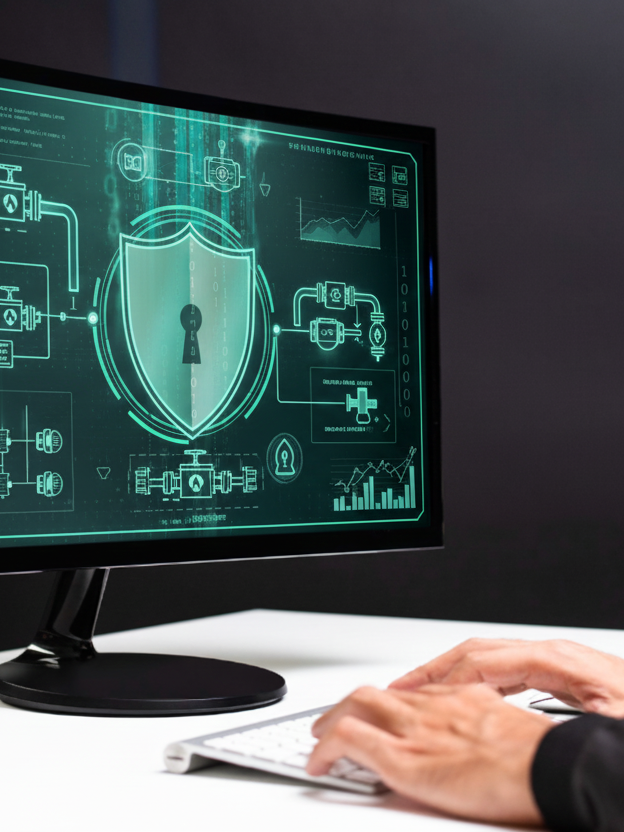
Cyber-Physical Resilience is a prerequisite for operational survival. By partnering with ST2 Srl, you don’t just modernize your control systems—you fortify them against tomorrow’s threats, ensuring maximum continuity and asset protection.
Contact us today to build resilience into your plant!
Contattaci oggi stesso!











Recent Comments