Excellence in Industrial Automation: Driving the Future of Production

Industrial Automation is one of the primary forces behind the technological evolution and production efficiency of modern industry. In an increasingly globalized and competitive world, excellence in automation is no longer an option but a necessity for companies aiming to remain competitive, reduce costs, and enhance product quality. This sector—which encompasses advanced technologies like robotics, Artificial Intelligence (AI), the Internet of Things (IoT), and Big Data—is redefining the boundaries of production and corporate management.

The Role of Automation in Industrial Competitiveness

In today’s industrial landscape, automation is the engine fueling competitiveness. The ability to automate production processes allows companies to gain significant advantages in speed, quality, and cost-efficiency. Automated systems can operate 24/7 without interruption, reducing the risk of human error and ensuring constant precision.

Beyond simple repetitive tasks, Industrial Automation involves the intelligent management of workflows, coordination between production lines, and resource optimization. In a context of shorter production cycles and tighter margins, automation excellence is the key to maintaining high quality while lowering operational costs.

Core Technologies of Excellence

Achieving excellence in Industrial Automation requires the integration of advanced technologies that improve efficiency, safety, and sustainability:

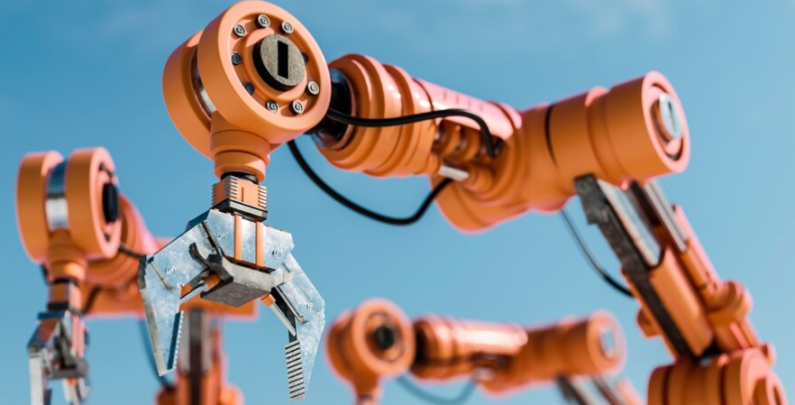
  • Industrial Robotics: From welding and painting to assembly and quality control. Collaborative robots (cobots) work alongside humans, increasing efficiency without compromising safety.
  • Internet of Things (IoT): Real-time connection of devices and sensors allows for continuous monitoring and the detection of anomalies before they become critical issues. This is the foundation of predictive maintenance.
  • Artificial Intelligence (AI) and Machine Learning: These solutions optimize production through predictive analysis. Intelligent systems can analyze data to optimize operation sequences and reduce downtime.
  • Big Data Analytics: The vast amount of data generated by smart machines enables more informed decision-making and waste reduction.
Automazioni Industriali

Sustainability through Automation

Industrial Automation is also a powerful tool for environmental sustainability. It allows companies to reduce resource consumption and optimize energy use. Through intelligent energy management, companies can monitor consumption in real-time and implement efficiency strategies, such as auto-adjusting processes based on demand. Furthermore, automation promotes the production of higher-quality, more durable goods, contributing to a reduction in industrial waste cycles.

The Challenge of Training and Organizational Adaptation

To reach peak excellence, implementing technology isn’t enough; companies must invest in people. Digital skills and innovation must become integral to employee training, with a focus on managing automated systems. Automation also requires a rethink of organizational models to maintain a balance between technological innovation and the value of human capital.

New Frontiers: The Smart Factory

The future of Industrial Automation points toward the “Smart Factory,” where every machine, sensor, and device is interconnected. Technologies like 5G and cloud platforms will enable even more flexible production environments, capable of adapting in real-time to demand fluctuations or unforeseen events.

The result of integrating advanced technology

Excellence in Industrial Automation is the result of integrating advanced technology, continuous training, and a long-term vision centered on quality and sustainability. Companies that invest in automation with an innovative mindset will lead the future of the industrial sector, transforming efficiency into a true competitive engine.

Contact us today to achieve excellence in your production processes!

READ MORE
Ingegneria e Automazione

Engineering and Automation for the Industry of Tomorrow

The global industrial sector is in a state of profound transformation, characterized by increasing digitalization, automation, and a radical shift toward sustainability. The “Industry 4.0” concept—marking the integration of AI, IoT, robotics, and Big Data—is now a reality driving the 21st-century industrial revolution. In this context, Engineering and Automation play a crucial role in shaping the industry of the future, ensuring production processes are more efficient, intelligent, and environmentally friendly.

The Role of Engineering in Tomorrow’s Industry

Engineering is at the heart of this transformation. Engineers are called to design and implement innovative solutions that not only improve performance but optimize the entire lifecycle of industrial processes.

  • Complex Systems Engineering: Designing integrated systems that combine diverse technologies to improve operational efficiency.
  • Green Engineering: Designing processes that reduce environmental impact through renewable energy, material recycling, and waste reduction (Circular Economy).
  • Digital Engineering: Using advanced mathematical models and augmented reality for predictive maintenance and process design.

segui il nostro blog!

Automation and AI: The New Frontier

What does “automation” truly mean for the industry of the future?

  • Advanced Robotics and Cobots: Collaborative robots designed to work alongside humans, handling repetitive tasks while humans focus on high-competence supervision.
  • Artificial Intelligence and Machine Learning: Systems that learn from sensor data to make autonomous decisions, optimizing production and identifying failures before they occur.
  • Internet of Things (IoT): Connecting machinery through smart sensors to monitor equipment health in real-time and create “smart” industrial plants.

Digital Transformation: The Digital Twin

Digitalization is the key. One of the most significant innovations is the Digital Twin: a virtual replica of a product or system that allows for real-time monitoring and simulation, reducing operational risks and optimizing resources. Cloud platforms and Blockchain further enhance transparency and control across the entire supply chain.

automazione e dell’ingegneria

Challenges and Opportunities

The primary challenge is integration: harmonizing new technologies with existing infrastructures. This requires significant investment in cybersecurity and a shift in workforce skills. As manual tasks are automated, the demand for professionals in AI, robotics, and Big Data management grows. However, the opportunities are vast. Engineering and Automation can reduce costs, improve quality, and foster the transition toward sustainable industrial models, securing a competitive position in the global market.

Conclusion

Engineering and Automation are the heart of future industrial transformation. The goal is to design systems that are intelligent, resilient, and sustainable. Tomorrow’s industry will not only be more efficient but also more ethical and green, guided by the innovation of this new era.

Contact us today to lead your business into the future of industrial innovation!

READ MORE
industrial automation

The evolution of industrial automation, from past to future

Industrial automation has revolutionized the way we produce goods and manage manufacturing operations. From its humble beginnings in the nineteenth century, when steam-powered machines began to replace human labor in factories, to today’s advanced systems based on Artificial Intelligence and the Internet of Things (IoT), industrial automation has constantly improved efficiency, precision and safety in industrial operations.

The origins of industrial automation

Industrial automation has its roots in the early industrial revolutions. In the 19th century, the invention of machines such as the mechanical loom and the steam engine led to the mechanization of factories, reducing dependence on manual labor and increasing production. However, it was only with the passage of time that more sophisticated technologies for automating industrial processes developed.

industrial automation

The role of electronics and PLCs

Towards the mid-20th century, the advent of electronics led to a further evolution of industrial automation. The first programmable logic controllers (PLCs) began to replace electromechanical relays, offering greater flexibility and programmability in industrial processes. PLCs made it possible to automate complex tasks and centralize the management of control systems.

The programmable automation revolution

In the 1970s and 1980s, with the introduction of computers and numerical control (CNC) systems, programmable automation experienced a real revolution. These systems made it possible to program machines in detail to perform precise and complex operations, from assembly to material processing. This led to a significant increase in productivity and product quality.

Artificial intelligence and predictive automation

Today, industrial automation is entering a new era with the increasingly widespread adoption of Artificial Intelligence (AI) and Predictive Automation. AI-based systems can analyze enormous amounts of data in real time to optimize production processes, predict machine failures and improve preventive maintenance. This leads to greater operational efficiency, reducing downtime and maintenance costs.

you can find more information about us by clicking here

The Internet of Things (IoT) and global connection

Furthermore, the Internet of Things (IoT) is transforming industrial automation by allowing the connection of machinery, sensors and smart devices in a global network. This interconnection allows remote monitoring and control of equipment, real-time data collection and process optimization more efficiently and accurately than ever before.

Social and economic implications

Despite the numerous advantages of industrial automation, there are also social and economic implications to consider. Automation can lead to job losses in the short term, but it can also create new specialized employment opportunities in the long term. It is therefore essential to adopt policies that favor the retraining of the workforce and promote technological innovation in an equitable and sustainable way.

The future of industrial automation

The future of the industry looks exciting, with the increasing adoption of technologies such as AI, IoT and collaborative robotics. These innovations promise to make factories even more efficient, flexible and intelligent, allowing large-scale production that is customized and adaptable to market needs. However, for this future to be fully realized, it is essential to address the challenges related to safety, data privacy and the environmental impact of industrial automation.


In conclusion, industrial automation has undergone an extraordinary evolutionary journey, radically transforming the way we produce goods and manage manufacturing operations. With the advent of increasingly advanced technologies, the future of the industry promises to be full of possibilities and promises, with the potential to further improve the efficiency, quality and sustainability of industrial production.

Blog

READ MORE