Skid Packages and Modular Units: Advantages in Prefabrication

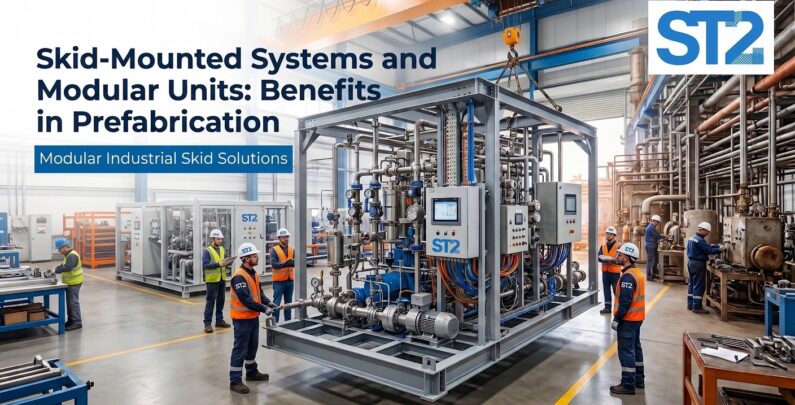
In the landscape of modern plant engineering, the adoption of modular solutions known as Skid Packages and Modular Units represents one of the most effective and advanced responses to the challenges of reducing construction site times, optimizing costs, and ensuring construction quality.

A skid package consists of the pre-engineered assembly of mechanical, hydraulic, electrical, and control components mounted on a self-supporting structural steel frame, ready to be transported, positioned, and connected directly to the final destination site with minimal downtime.

To discover our services, click here

Skid Packages and Modular Units: Guaranteeing Quality and Safety

The primary competitive advantage of industrial skid packages lies in transferring assembly, welding, cabling, and testing activities from the open construction site environment—often characterized by complex logistics, adverse weather conditions, and stringent safety constraints—to the supplier’s specialized workshops.

Inside a protected and controlled workshop, manufacturing processes benefit from:

  • High quality standards: Certified welds and facilitated non-destructive testing.
  • Integrated FAT testing: Execution of factory acceptance tests before the unit leaves the production plant.
  • Operational safety: Reduction of accident risks and unforeseen events typical of on-site assembly.
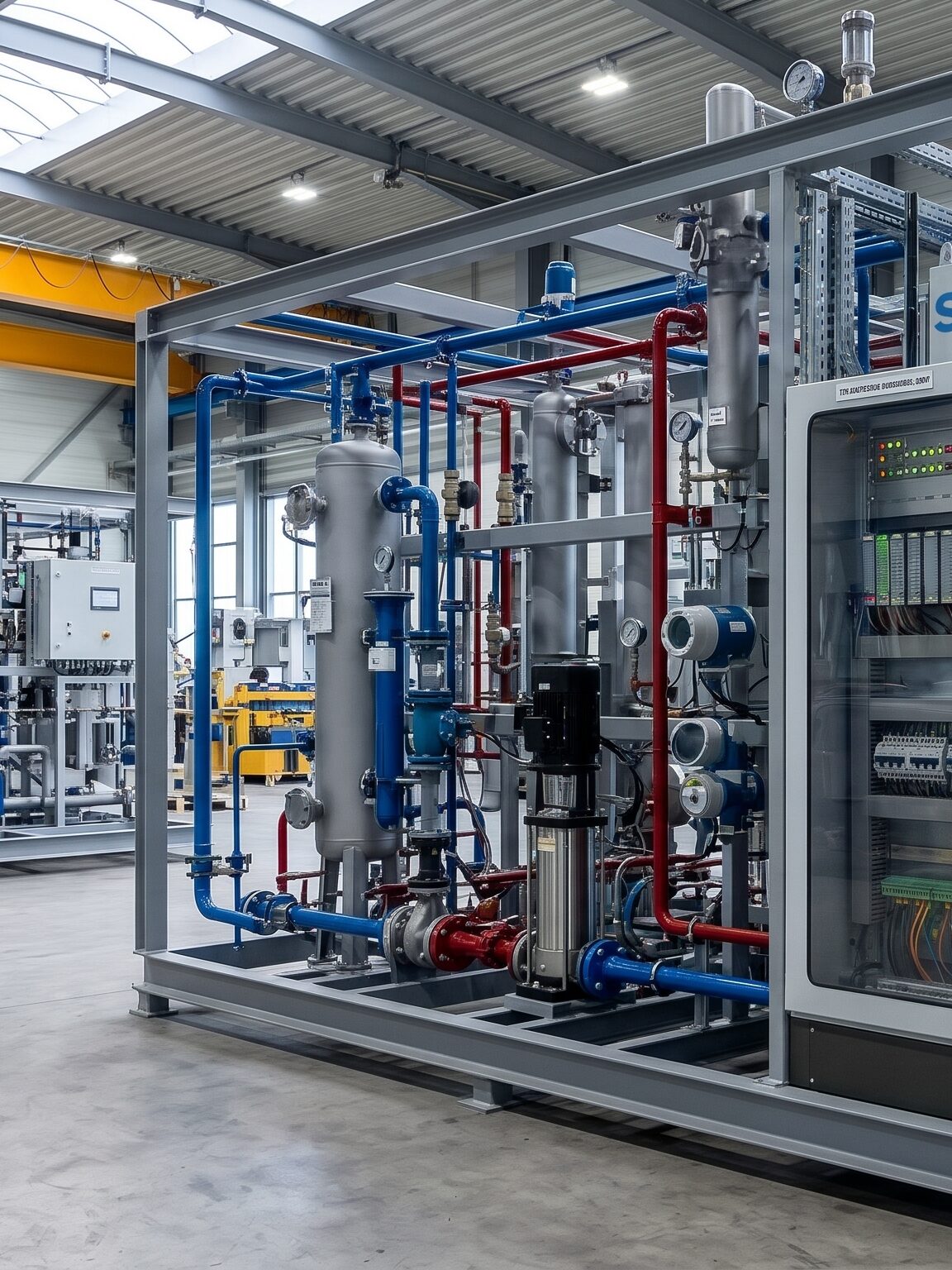
Skid Packages and Modular Units: Multidisciplinary E&I Engineering, Plug-and-Play Approach

For E&I and automation engineering teams, designing a skid requires extraordinary multidisciplinary coordination.

Engineers must integrate within extremely compact volumes:

  1. Electrical panels and automation: Power and control cabinets alongside dedicated PLC or DCS systems.
  2. Process instrumentation: High-precision sensors, control valves, and pressurized piping.
  3. Ergonomics and maintenance: Optimized layouts to ensure future maintenance accessibility in total safety.

Careful management of mechanical and electrical interfaces with the main plant is essential to guarantee a “plug-and-play” installation free from unexpected events during on-site integration.

Reducing Time-to-Market and Efficiency in Revamping

From an economic and strategic standpoint, the modularity offered by industrial skid packages drastically reduces overall project risks. On-site civil construction works and the pre-fabrication of the skid unit proceed in parallel, significantly shortening the overall plant construction time (time-to-market).

Furthermore, easy handling, compact dimensions, and a reduced spatial footprint make skid packages the ideal solution not only for new greenfield plants, but above all for complex revamping interventions in pre-existing industrial spaces that are historically confined or difficult to access for traditional assembly crews.

Need Skid Package and Modular Unit Design for Your Plant?

Contact the ST2 Srl team today for consultations on detail E&I engineering and custom skid package manufacturing.

Contattaci oggi stesso!

📧 info@st2srl.com | 🌐 www.st2srl.com
READ MORE

Industrial Cable Management and Cabling: Optimization and Traceability

Inside any complex industrial infrastructure, industrial structured cabling—the comprehensive network of electrical, measurement, control, and communication cables—represents the true nervous system of the entire production site.

Designing and implementing industrial structured cabling requires advanced engineering skills, meticulous planning, and rigorous compliance with international technical standards regarding fire safety, electromagnetic compatibility, and protection against environmental stress. A professional cable laying execution guarantees total operational continuity, minimizes the risk of failures, and facilitates any subsequent integration, diagnostics, or maintenance intervention.

To discover our services, click here

Industrial structured cabling: Flow Separation and Electromagnetic Compatibility (EMI)

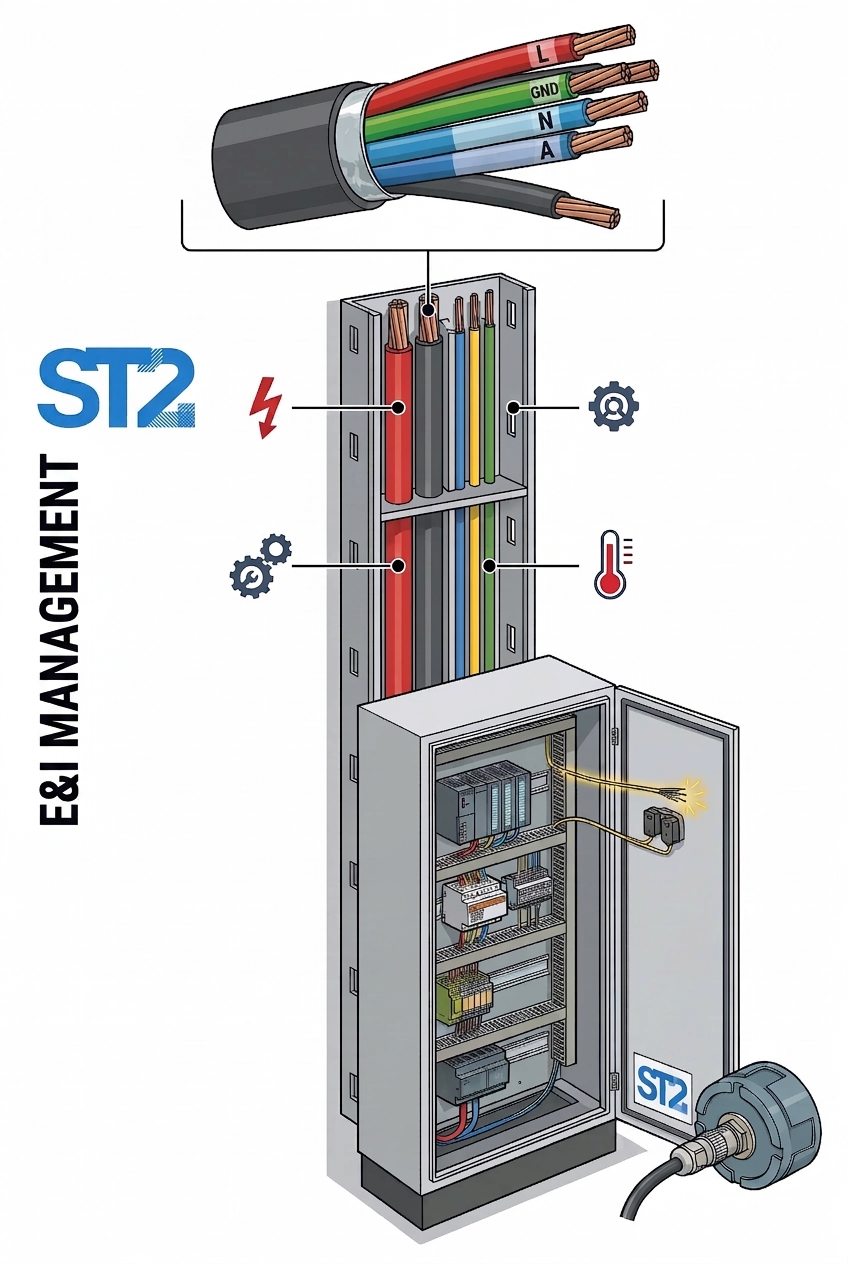
The proper management of signal and power flows must absolutely prevent electromagnetic interference (EMI) that can occur between high-voltage power cables and extra-low-voltage signal conductors or digital field bus networks.

To achieve this fundamental result in industrial structured cabling, E&I engineering defines:

  • Separated routing paths: Accurate calculation of cable tray fill factors and physical separation of power cables from signal cables.
  • Thermal dissipation and shielding: Optimization of natural cooling and selection of shielding suitable for specific environmental conditions.
  • Resistance to harsh environments: Specific design for ATEX explosion-hazard classified areas or aggressive environments characterized by corrosive chemical substances, continuous mechanical vibrations, or extreme thermal excursions.

Unique Traceability to Reduce Plant Downtime

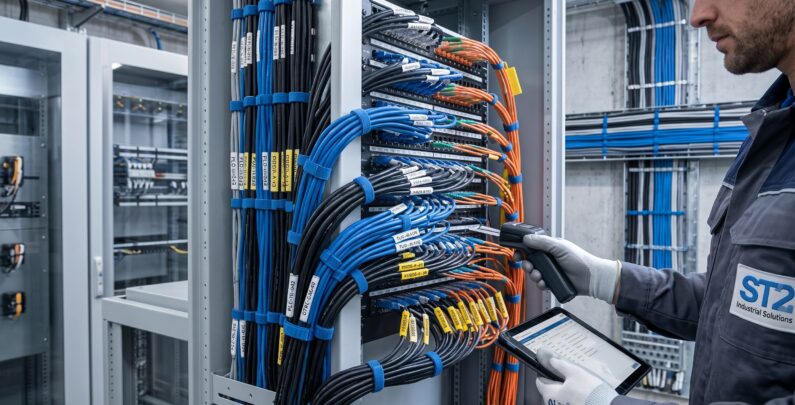
Another extremely crucial aspect of management concerns the traceability and unique identification of every single cable, conductor, and terminal block inside the cabinets.

The use of standardized labeling schemes and high-strength materials, combined with real-time updated plant databases, allows maintenance teams and field engineering technicians to intervene with maximum rapidity in the event of an anomaly or during delicate plant revamping phases. Poor traceability in electrical cabinets represents one of the primary causes of unexpected plant downtime, diagnostic errors, and lengthy troubleshooting inactivities.

Industrial structured cabling: Industry 4.0 Evolution, Fiber Optics and LSZH Cables

The continuous evolution towards Industry 4.0 pushes E&I engineering to adopt high-performance solutions for industrial structured cabling:

  1. Fiber optic backbones: Capillary use of fiber optics to guarantee high-speed communications immune to electromagnetic disturbances.
  2. LSZH (Low Smoke Zero Halogen) cables: Utilization of halogen-free cables with low smoke and corrosive gas emission to protect operators and structures.
  3. Workmanlike construction details: From the choice of suitable cable glands to the correct grounding of shields to guarantee overall system safety.

Caring for cabling engineering means not only meeting project regulatory requirements, but also building a solid, highly flexible infrastructure ready to welcome future industrial expansions.

Need Support for E&I Cabling Design and Management?

Contact the ST2 Srl team today for consultations on detail engineering, structured cabling, and industrial plant revamping.

Contattaci oggi stesso!

📧 info@st2srl.com | 🌐 www.st2srl.com
READ MORE

FAT and SAT testing for industrial: plantsPlant Commissioning and Start-up

In electrical and instrumentation (E&I) engineering, the journey from theoretical design to the industrial operation of a facility is marked by critical milestones and rigorous quality checks. Among these, the testing phases serve as the ultimate proving ground for ensuring operational reliability, intrinsic safety, and full regulatory compliance, The FAT and SAT testing for industrial.

In particular, the methodical and punctual execution of FAT and SAT tests for industrial plants serves as the fundamental pillar upon which the success of any industrial project is built—whether in the Oil & Gas sector, advanced manufacturing, the energy industry, or complex chemical processes.

Discover our services, click her

FAT and SAT testing for industrial plants: On-Site Verification at the Manufacturer’s Facility

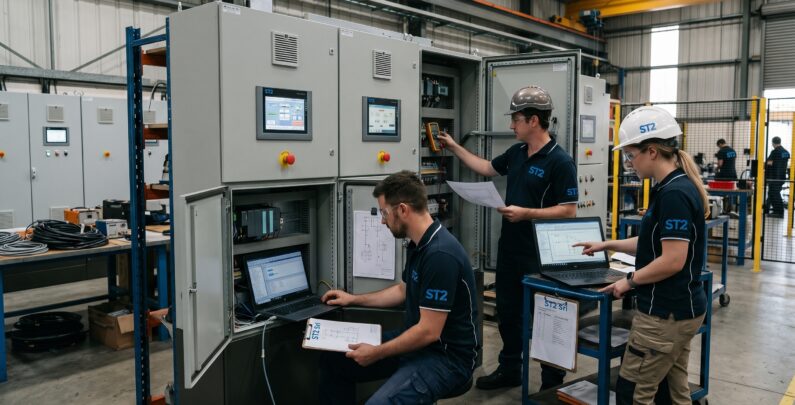
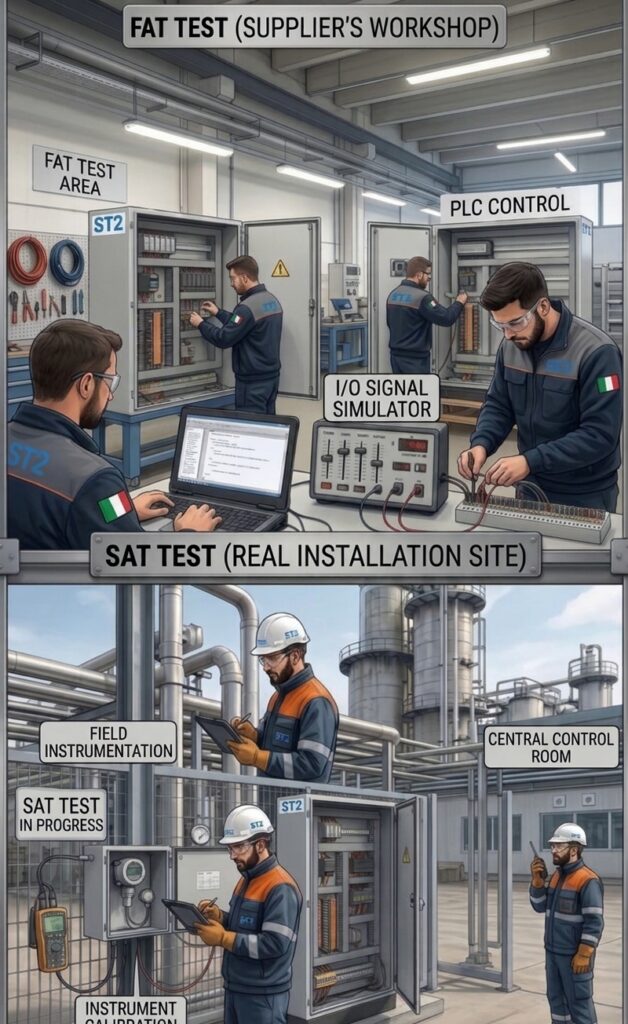
The Factory Acceptance Test (FAT) is conducted directly at the supplier’s or system integrator’s facility before the equipment is shipped to the site. This preliminary phase makes it possible to verify that electrical panels, PLC- or DCS-based automation systems, and skid packages comply with the project’s technical specifications and applicable international standards.

Conducting a thorough FAT for industrial plant FAT and SAT testing means:

  • Validating software logic: Stress-testing hardware and software interfaces through I/O signal simulations, ensuring that each component responds in accordance with the cause-and-effect matrix established during the detailed engineering phase.
  • Detecting early anomalies: Promptly resolving wiring faults or bugs in the control logic within a safe and controlled environment.
FAT and SAT testing for industrial plants
  • Reducing construction site costs: Avoiding expensive field modifications and critical delays to the installation schedule.

FAT and SAT Testing for Industrial Automation: The Site Acceptance Test (SAT) – Integration into the Actual Environment

However, passing the factory acceptance test does not complete all the verifications required for commissioning. Once the components have been transported, anchored, and positioned in their final locations at the installation site, the Site Acceptance Test (SAT) comes into play.

This second phase validates the system’s integration into its actual operational environment. During the SAT, engineers verify:

  1. Component integrity: The absence of damage incurred during transport and the correctness of field connections.
  2. Calibration and communication: The proper calibration of measuring instruments and seamless communication between peripheral devices, industrial networks, and the central control room.
  3. Response under operating conditions: Simulation of actual operating conditions to verify that the response times of shut-off valves and the handling of alarms are perfectly synchronized.

Vulnerability Management in the industrial ecosystem

Managing vulnerabilities in an industrial environment requires a different approach compared to IT. It is not always possible to apply immediate patches to PLCs without risking critical disruptions. The appropriate strategy involves using passive monitoring systems that detect anomalies in network traffic without sending control packets, ensuring constant visibility without interfering with real-time processes.

Loop Check and Total Cost of Ownership Optimization

The testing process typically concludes with loop checks, verifying the continuity and accuracy of the signal from each field instrument all the way to the supervisory system.

Relying on specialized expertise for the execution of FAT (Factory Acceptance Testing) and SAT (Site Acceptance Testing) for industrial plants drastically reduces commissioning time, minimizes unplanned downtime during start-up, and safeguards the client’s overall investment. The adoption of standardized testing protocols—complete with detailed reporting and traceability matrices—therefore represents a strategic investment for optimizing the Total Cost of Ownership (TCO) and ensuring high, long-lasting performance.

Support for Testing Your Industrial Systems?

Contact the ST2 Srl team today to schedule testing, inspection, and commissioning activities for your E&I systems.

READ MORE

Cybersecurity for OT/SCADA Systems: Defending Industrial Infrastructure

Digitalization has broken down the barriers between IT (Information Technology) and OT (Operational Technology), exposing OT/SCADA systems to cyber threats previously confined to the office environment. An attack on an industrial plant jeopardizes not only data but also the physical integrity of processes and personnel safety. This article outlines the integrated approach necessary to protect critical infrastructure, balancing cyber-crime protection with the imperative need to maintain the operational availability of process plants.

Discover our services, click here.

The IT/OT Convergence in OT/SCADA Systems: A New Risk Perimeter

Historically, OT systems were isolated via an “air gap.” Today, the integration of IIoT (Industrial Internet of Things) and the need for remote monitoring have opened the door to critical vulnerabilities. The main risk is that industrial protocols (such as Modbus or Profinet), created in an era of total trust, do not include native authentication or encryption mechanisms. A breach in the corporate network can propagate laterally to the control of PLCs (Programmable Logic Controllers), paralyzing production.

Segmentation and Defense-in-Depth (IEC 62443)

The IEC 62443 standard is essential for the security of OT/SCADA systems and automation platforms. Architecture must be based on the “defense-in-depth” concept, segmenting the network into isolated functional zones. The goal is to prevent an infectious event in one part of the system from spreading to the entire infrastructure.

For a resilient architecture, two key strategies must be implemented:

  • Network Segregation: Use of industrial firewalls to rigidly separate automation cells.
  • Access Control: Implementation of multi-factor authentication protocols for every human access to control systems.

Vulnerability Management in the OT/SCADA systems Industrial Ecosystem

Managing vulnerabilities in an industrial environment requires a different approach than in IT. It is not always possible to perform immediate patches on PLCs without risking critical interruptions. The correct strategy involves using passive monitoring systems that detect network traffic anomalies without sending control packets, ensuring constant visibility without interfering with real-time processes.

Rely on the Expert Engineering of ST2 Srl

Protecting an industrial plant requires deep knowledge of automation processes, not just IT. ST2 Srl supports technical managers in designing secure network architectures and protecting critical systems, ensuring asset protection without compromising productivity.

Do you want to secure your industrial infrastructure?

Contact us today!

📧 info@st2srl.com | 🌐 www.st2srl.com
READ MORE

Hydrogen-Ready Industrial Plants: Technical Challenges and Strategic Conversion

The transition to hydrogen poses complex challenges for heavy industry. Making plants “Hydrogen-ready” requires a multidisciplinary analysis: hydrogen possesses unique chemical-physical properties that drastically affect materials, seals, and overall safety. This article summarizes the technical criticalities related to conversion, analyzing how the integration of hydrogen blends influences metallurgy, emissions, and regulatory compliance, while providing a strategic guide for technical departments committed to decarbonization.

To learn more about our services, click here.

The Hydrogen-Ready Embrittlement Challenge

The primary risk to structural integrity is Hydrogen Embrittlement. Atomic hydrogen can diffuse into the crystalline lattices of steels, reducing ductility and promoting crack propagation under load. To manage this phenomenon, it is essential to conduct a residual life analysis on existing components, verifying their compatibility according to ASME B31.12 or API RP 941 standards.

Thermodynamics and Flame Stability

Conversion alters combustion kinetics: hydrogen has a very high flame speed and a higher temperature compared to natural gas. Such properties increase the risk of Flashback and the formation of thermal NOx. To maintain efficiency, the following is required:

  • Burner Upgrades: Replacement with models designed specifically to prevent flashback.
  • Advanced Control: Implementation of real-time mixture monitoring systems.

Hydrogen-Ready Sealing Systems and Fugitive Emissions

Being the smallest molecule in existence, hydrogen tends to permeate through gaskets and flanges that would be tight with methane. To limit fugitive emissions and ensure safety in confined areas, it is necessary to adopt higher sealing standards, such as those provided by ISO 15848-1, replacing standard gaskets with metal-to-metal solutions or high-density polymers.

Functional Safety and ATEX Area Classification

Hydrogen requires a comprehensive review of hazardous area classification (IEC 60079-10-1). As a Group IIC gas with a wide flammability range (4-75%), many plants must upgrade their safety class (e.g., from Zone 2 to Zone 1). Due to its extreme buoyancy, risk management must include specific solutions:

  • Detection: Implementation of sensors capable of identifying infinitesimal leaks in real-time.
  • Ventilation: Installation of forced ventilation systems to prevent upward gas stratification.

📧 info@st2srl.com | 🌐 www.st2srl.com
Contact us today!

READ MORE

Functional Safety and IEC 61511 Standard: An Implementation Guide

Managing Functional Safety according to IEC 61511 is not merely a regulatory obligation, but a strategic pillar for industrial efficiency. Correct implementation of the IEC 61511 standard allows for the mitigation of residual risks in process plants, transforming protection systems into valuable assets. This article guides technical staff and decision-makers through the Safety Life Cycle, explaining how a rigorous approach drastically reduces the probability of critical downtime, ensuring compliance with European directives while protecting both human capital and the environment.
To learn more about our services, click here.

Per saperne di piĂč sui nostri servizi, clicca qui

The Safety Life Cycle and IEC 61511 Functional Safety

The IEC 61511 standard moves beyond a prescriptive approach, mandating the management of SIS (Safety Instrumented Systems) throughout the entire life cycle of the plant, from design to decommissioning. To ensure compliance and operational readiness, companies must implement a documented and consistent process based on three key operational phases:

  • Risk Analysis: Identification of critical issues using standardized methodologies to define necessary safety barriers.
  • SIS Design: Coherent integration of transmitters, logic solvers, and final elements.
  • Cyclical Maintenance: Periodic validation to ensure the maintenance of the declared safety integrity level.

Defining the SIL Target: Balancing Risk and Cost

The first step for a Plant Manager is to understand that the SIL (Safety Integrity Level) is not a “grade” assigned to the plant, but a quantitative measure of risk. Through HAZOP (Hazard and Operability Analysis) and LOPA (Layer of Protection Analysis), engineering teams must determine the Probability of Failure on Demand (PFDavg). The technical challenge lies in balancing protection with complexity, avoiding over-dimensioning that unnecessarily increases maintenance costs and false alarms, while complying with D.Lgs. 81/2008 and ATEX directives.

The Importance of the Safety Requirements Specification (SRS)

Many industrial automation projects fail in the initial stages due to the lack of a rigorous SRS. This document serves as a fundamental bridge between process engineering and automation, precisely defining response times, “fail-safe” conditions, and validation protocols. Without a well-defined SRS, subsequent commissioning becomes an operational risk, as there is no reference standard to verify that the SIS responds exactly as intended by the original design.

Maintenance, Proof Testing, and Reactivity

An SIS will degrade if not consistently maintained. The Proof Test is a crucial activity that periodically verifies the functionality of the entire loop—an operation that, in Italy, requires strategic integration with periodic inspections of pressure equipment and electrical systems. An expert approach allows for the optimization of maintenance windows, reducing necessary downtime and maximizing the useful life cycle of critical components while keeping the plant’s protection level constant.

Rely on the expertise of ST2 Srl for IEC 61511 Functional Safety

Compliance with Functional Safety is not an expense, but an investment in the continuity and safety of your company. ST2 Srl supports technical and HSE management at every stage of the journey: from risk analysis and SIS design to final validation and the drafting of maintenance protocols.

Do you want to secure your plant? Contact us today!

📧 info@st2srl.com | 🌐 www.st2srl.com
READ MORE
explosive

ATEX Design: Working safely in explosive atmospheres

In chemical, pharmaceutical or oil and gas plants, the presence of flammable gases, vapours or dusts is not an exception, but a standard operating condition. Managing an area at risk of explosion involves not only selecting the right components, but also applying rigorous engineering standards to protect people’s lives and the integrity of assets. At ST2 Srl, compliance with the ATEX Directive is at the heart of our E&I design.

To find out more about our services, click here

Beyond component marking

Many people think that simply buying a sensor marked with the ‘Ex’ symbol is enough to comply with regulations. The reality is more complex: ST2’s ATEX engineering covers the entire system.

  • Zone Classification: We analyse the likelihood of explosive atmospheres occurring in order to correctly define the zones (0, 1, 2 or 20, 21, 22). An accurate classification prevents overspending on unnecessary protection or, worse still, underestimating a risk.
  • Verification of Intrinsically Safe (Ex-i) Loops: We meticulously calculate the electrical parameters (inductance and capacitance) to ensure that the energy in the circuit is never sufficient to trigger an explosion.
explosive

Documentation: Your system’s ‘passport’

A safe system must also be a well-documented system. ST2 provides its customers with all the support they need to create and maintain the Technical File:

  • Tools and Certificates List: Collection and verification of all supplier documentation.
  • Verification calculations: Detailed reports demonstrating the compatibility between barriers, cables and field instruments.
  • Installation drawings: Diagrams clearly showing cable routes and sealing methods to prevent the spread of flames.

Training and Consultancy

We don’t just hand over the drawings. We support HSE managers and maintenance staff in understanding how to carry out work correctly on a certified system. A single screw that’s not tightened properly on an ‘Ex-d’ (explosion-proof) enclosure can compromise the safety of the entire system: we’re here to make sure that doesn’t happen.

ATEX safety should not be a barrier to productivity. With ST2 Srl’s engineering approach, explosion protection becomes an invisible yet robust part of your plant, allowing you to focus on production with the assurance that you are fully compliant with current regulations.

📧 info@st2srl.com | 🌐 www.st2srl.com

Contattaci oggi stesso!

READ MORE
system

Engineering on a human scale: Why the interface makes all the difference in a plant

Behind a complex industrial plant lie thousands of data points, cables and sensors. But for the operator who has to manage it on a daily basis, it all boils down to one thing: the screen in front of them. At ST2 Srl, we believe that engineering excellence must, above all, be easy to use.

To find out more about our services, click here

Not just graphics, but operational clarity

Designing an HMI (Human-Machine Interface) involves more than just choosing attractive colours. It involves analysing the operator’s workflow to help them avoid making mistakes under pressure.

  • Intelligent alarm management: We help businesses eliminate ‘false alarms’ that distract staff, focusing attention solely on genuine critical issues.
  • Less clutter, more control: Instead of cluttering the screen with hundreds of numbers, we use intuitive graphics that immediately highlight what’s wrong.
system

Access to data, wherever you are

Today, ST2’s engineering solutions make it possible to access data outside the control room. Thanks to web-based and mobile systems, a production manager can monitor the plant’s operational status directly from their office or home, receiving real-time notifications if any parameter falls outside the safety limits.

Reduce training time

A well-designed system is one that is quick to learn. The interfaces we develop are designed to be intuitive for everyone: clear icons, logical navigation paths and on-screen help. This translates into significant time and cost savings for the company when training new staff.

Automation should not be an obstacle, but an ally. Choosing ST2 Srl means investing in advanced technological systems that remain, however, incredibly attuned to the needs of the people who use them. Because a safe system is, first and foremost, a system that is easy to understand.

📧 info@st2srl.com | 🌐 www.st2srl.com
Contattaci oggi stesso!

READ MORE

Why ST2 Srl is the technical partner that makes all the difference

In today’s industrial landscape, finding an engineering firm is easy; finding a partner who takes responsibility for your plant as if it were their own is the real challenge. Many companies struggle with structures that are either too rigid or, conversely, too unstructured to handle complexity. ST2 Srl strikes exactly the right balance: the expertise of a long-standing legacy combined with the agility of a dedicated team.

To find out more about our services, click here

International Experience, Tailored Approach

With over 1,300 projects under our belt worldwide, we have encountered every kind of challenge, from desert environments to offshore platforms. This wealth of experience means we never have to ‘wing it’. Yet we treat every project as a one-off: we do not apply standard solutions, but tailor our engineering to the client’s actual operational and budgetary requirements.

The Value of Continuity

One of the biggest problems in large firms is the constant change of contact persons throughout a project. At ST2, we believe in the value of a personal touch. The expert who designs your control system is often the same person you will see on site during commissioning. This continuity eliminates misunderstandings and drastically speeds up project delivery times.

Brand independence

Unlike those tied to specific hardware manufacturers, ST2 Srl maintains strict technological independence. Our advice is always based on what is best for your system, not on what we need to sell. Whether it’s Siemens, Schneider, Rockwell or others, our priority is seamless integration.

Clear Language, Practical Solutions

We know that project managers need answers, not complications. We communicate transparently, highlighting risks before they become problems and proposing solutions that take return on investment (ROI) into account.

Choosing ST2 Srl isn’t just about purchasing engineering hours; it’s about investing in the peace of mind that comes with a project completed without any surprises. If you’re looking for a team that combines a holistic approach, technical precision and constant support, ST2 is the answer.

📧 info@st2srl.com | 🌐 www.st2srl.com
Contattaci oggi stesso!

READ MORE

When Engineering Becomes Problem Solving

In an ideal industrial world, every component fits together seamlessly and every piece of software runs without a hitch. In reality, plant managers face daily challenges: a sensor sending incorrect signals, an interface that fails to communicate, or an old control panel that stops responding. At times like these, you don’t just need a designer; you need a troubleshooter.

To find out more about our services, click here

‘On-Demand’ Engineering

ST2 Srl has built its reputation not only on large-scale projects, but also on its ability to step in where others stop. Our technical consultancy service comes into play precisely when the unexpected arises:

  • Rapid Regulatory Compliance: We help you bring your systems into line with new regulations (such as NIS2 or ATEX regulations) without disrupting your operations.
  • Root Cause Analysis: We don’t just repair the damage; we investigate why it happened to prevent it from happening again.
  • Control Loop Optimisation: If your process is unstable, we recalibrate the automation logic to restore the plant to maximum efficiency.
problem

Why experience counts for more than theory

Solving a complex technical problem requires a mental library of situations encountered before. With over 1,300 projects under their belt, the engineers at ST2 Srl have tackled almost every conceivable scenario in critical sectors such as Oil & Gas, Water Treatment and the Marine Industry.

This ‘historical memory’ enables us to:

  1. Reducing diagnosis times: We know where to look before anyone else does.
  2. Proposing practical solutions: We aim for a solution that minimises plant downtime and costs.

A good engineering partner proves its worth when you need it most. ST2 Srl isn’t just the firm that designs your next plant; it’s a team of experts ready to analyse, refine and upgrade your existing systems. Because the continuity of your production is our most important measure of success.

📧 info@st2srl.com | 🌐 www.st2srl.com

Contattaci oggi stesso!

READ MORE