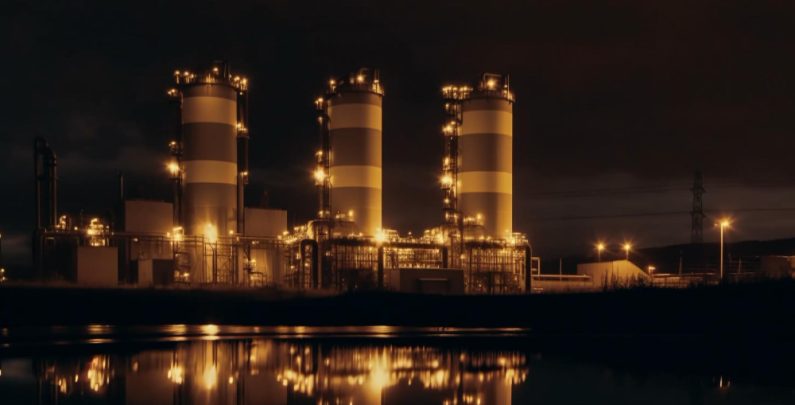
energy and oil industry

Multidisciplinary Engineering: Essential for energy and oil industry

The energy and oil industry represents one of the fundamental pillars of the global economy, providing the vital fuel to power our modern societies. However, behind this seemingly simple supply lies a complex and intricate world, requiring diverse skills and deep technical knowledge. In this context, multidisciplinary engineering emerges as an invaluable resource, providing an integrated approach to address the sector’s most challenging issues.

The Complexity of the Energy and Oil Industry

The extraction, production, and distribution of energy and oil involve a wide range of processes, from geology to chemical engineering, from robotics to automation, from resource management to data analysis. Furthermore, environmental impacts and technological challenges are pushing the industry towards increasingly innovative and sustainable solutions.

To discover our services, click here

The Multidisciplinary Approach

Tackling these challenges requires an integrated approach that combines knowledge and skills from various disciplines. Multidisciplinary engineering allows for the combination of knowledge from mechanical engineering, chemical engineering, electrical engineering, computer science, and more, to design and manage complex plants and processes efficiently and effectively.

Innovation and Sustainability
energy and oil industry

Multidisciplinary engineering plays a key role in technological innovation and in the search for sustainable solutions for the energy and oil industry. This approach enables the development of advanced technologies for the extraction, production, and distribution of energy and oil, while reducing environmental impact and improving energy efficiency.

Responding to Emerging Challenges

Emerging challenges, such as climate change, infrastructure security, the reduction of greenhouse gas emissions, and the transition to renewable energy sources, require innovative and interdisciplinary solutions. Multidisciplinary engineering allows these challenges to be effectively addressed by integrating knowledge and skills from different disciplines to find sustainable and innovative solutions.

Collaboration and Synergies

The multidisciplinary approach promotes collaboration among professionals from different areas of expertise, creating synergies that foster innovation and efficiency. Through the sharing of knowledge and experiences, multidisciplinary engineers can address the most demanding challenges of the energy and oil industry in a creative and innovative way.

In conclusion, multidisciplinary engineering plays a fundamental role in the energy and oil industry, providing an integrated approach to address the complex and intrinsic challenges of the sector. Through collaboration and innovation, multidisciplinary engineers can help ensure a secure, sustainable, and efficient energy supply for future generations.
Blog

READ MORE
industrial automation

The evolution of industrial automation, from past to future

Industrial automation has revolutionized the way we produce goods and manage manufacturing operations. From its humble beginnings in the nineteenth century, when steam-powered machines began to replace human labor in factories, to today’s advanced systems based on Artificial Intelligence and the Internet of Things (IoT), industrial automation has constantly improved efficiency, precision and safety in industrial operations.

The origins of industrial automation

Industrial automation has its roots in the early industrial revolutions. In the 19th century, the invention of machines such as the mechanical loom and the steam engine led to the mechanization of factories, reducing dependence on manual labor and increasing production. However, it was only with the passage of time that more sophisticated technologies for automating industrial processes developed.

industrial automation

The role of electronics and PLCs

Towards the mid-20th century, the advent of electronics led to a further evolution of industrial automation. The first programmable logic controllers (PLCs) began to replace electromechanical relays, offering greater flexibility and programmability in industrial processes. PLCs made it possible to automate complex tasks and centralize the management of control systems.

The programmable automation revolution

In the 1970s and 1980s, with the introduction of computers and numerical control (CNC) systems, programmable automation experienced a real revolution. These systems made it possible to program machines in detail to perform precise and complex operations, from assembly to material processing. This led to a significant increase in productivity and product quality.

Artificial intelligence and predictive automation

Today, industrial automation is entering a new era with the increasingly widespread adoption of Artificial Intelligence (AI) and Predictive Automation. AI-based systems can analyze enormous amounts of data in real time to optimize production processes, predict machine failures and improve preventive maintenance. This leads to greater operational efficiency, reducing downtime and maintenance costs.

you can find more information about us by clicking here

The Internet of Things (IoT) and global connection

Furthermore, the Internet of Things (IoT) is transforming industrial automation by allowing the connection of machinery, sensors and smart devices in a global network. This interconnection allows remote monitoring and control of equipment, real-time data collection and process optimization more efficiently and accurately than ever before.

Social and economic implications

Despite the numerous advantages of industrial automation, there are also social and economic implications to consider. Automation can lead to job losses in the short term, but it can also create new specialized employment opportunities in the long term. It is therefore essential to adopt policies that favor the retraining of the workforce and promote technological innovation in an equitable and sustainable way.

The future of industrial automation

The future of the industry looks exciting, with the increasing adoption of technologies such as AI, IoT and collaborative robotics. These innovations promise to make factories even more efficient, flexible and intelligent, allowing large-scale production that is customized and adaptable to market needs. However, for this future to be fully realized, it is essential to address the challenges related to safety, data privacy and the environmental impact of industrial automation.


In conclusion, industrial automation has undergone an extraordinary evolutionary journey, radically transforming the way we produce goods and manage manufacturing operations. With the advent of increasingly advanced technologies, the future of the industry promises to be full of possibilities and promises, with the potential to further improve the efficiency, quality and sustainability of industrial production.

Blog

READ MORE