
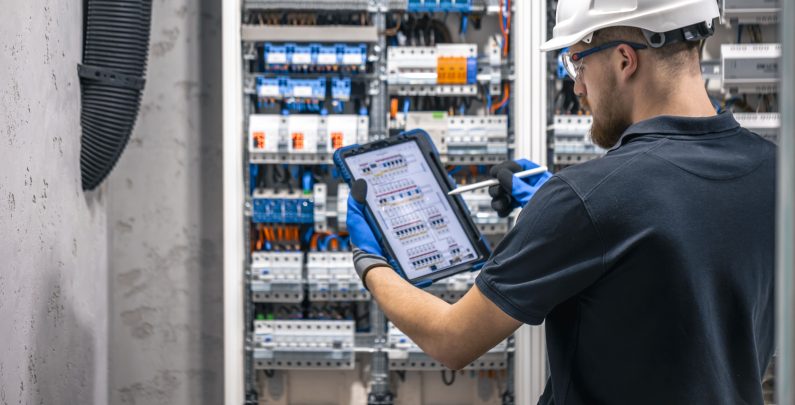
Wellhead Control Panels (WHCP) Onshore & Offshore
At the heart of Oil & Gas operations, Wellhead Control Panels (WHCP) represent an essential pillar for ensuring control, safety, and operational continuity. Whether for onshore or offshore facilities, these panels combine pneumo-hydraulic technology with electronic control to manage critical valves under extremely variable conditions. In this article, we explore the key functions of WHCPs, the environmental challenges they face, and the regulations governing their design and installation.
To discover our services, click here
Critical Functions of WHCPs in Demanding Contexts
Wellhead Control Panels play a central role in controlling fundamental valves such as Safety (SSV), Master (MSV), Wing (WSV), Choke, ESD (Emergency Shutdown), and HIPPS (High-Integrity Pressure Protection System).
Thanks to their modular structure, it is possible to configure panels for single or multiple wells, integrating pull-out modules that simplify maintenance and upgrade operations. In offshore environments characterized by difficult access and saline air, this adaptability is vital for maintaining uptime and safety.
Robust Design for Extreme Conditions
Durability is an indispensable requirement. WHCP units are manufactured using certified materials, such as AISI 316 stainless steel, to offer maximum corrosion resistance. To ensure safe operation in the presence of explosive gases, components are selected for compliance with ATEX and IECEx standards. Furthermore, the ability to operate in offshore, desert, or arctic environments demonstrates the reliability of these systems under the most adverse conditions.
Integration with Advanced Control Systems
In modern industrial contexts, interfacing with PLC, DCS, SCADA, and RTU systems is essential. WHCPs integrate seamlessly with local and remote control systems, allowing real-time monitoring of well status and valve positions. Advanced automation requirements are supported by SIL2 or SIL3 design logics, compliant with IEC 61508 standards, certifying functional safety and the ability to react automatically during fault scenarios.
Regulations and Safety Best Practices
Regulatory compliance is fundamental for maintaining integrity in critical plants. Wellhead Control Panels are engineered according to:
- IEC 61508: For Safety Integrity Levels (SIL), ensuring reliable responses in emergency situations.
- ATEX and IECEx: For compatibility in explosion-risk areas.
- International Directives: For onshore and offshore remote control management.
A compliant project achieves perfect integration between advanced technology and safety criteria, significantly reducing operational risks.
Real-World Applications and Success Stories
Offshore facilities in extreme conditions have benefited from WHCPs designed for multiple safety layers and full SCADA integration. Similarly, in onshore plants, the installation of high-quality panels has led to a drastic reduction in maintenance downtime and improved remote supervision.
Conclusion: Engineering Operational Safety
In critical Oil & Gas operations, Wellhead Control Panels are the key elements for ensuring safety, continuity, and integrated well management. Their robust design, adherence to international standards, and seamless integration into control systems make them fundamental components for any sophisticated facility.
Contact ST2 Srl today for professional support in designing and installing customized WHCP solutions!
Recent Comments