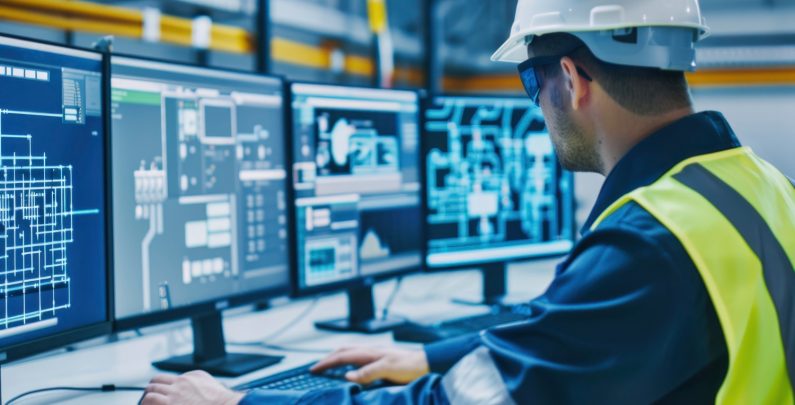
Digital twins and advanced simulations

In today’s industrial landscape, the ability to anticipate and resolve operational issues is essential to maintaining competitiveness and sustainability. Digital twin technology, combined with advanced simulations, is revolutionising plant design and management, offering innovative tools to improve operational efficiency, reduce costs and increase safety. This article explores these solutions in detail, illustrating the concrete benefits and real-world applications that are transforming the industry.

follow the blog!

What are digital twins?

Digital twins are virtual replicas of physical systems, capable of simulating the behaviour of industrial plants in real time. These digital representations allow every aspect of the production process to be monitored, reproducing operating conditions and future scenarios. By integrating data from sensors and IoT systems, digital twins offer a comprehensive and dynamic view of the plant, serving as a predictive and analytical tool to identify potential anomalies before they occur.

Benefits of advanced simulations

The use of advanced simulations, supported by digital twins, allows different operating configurations to be tested without interrupting the actual operation of the plants. The main benefits include:

  • Predictive Diagnostics: Real-time data analysis to identify imminent failures and schedule targeted interventions.
  • Process Optimisation: Evaluation and improvement of operational flows to maximise productivity and reduce waste.
  • Cost Reduction: Preventing unscheduled downtime and emergency maintenance leads to significant cost savings.
  • Safety Improvement: Simulating critical scenarios helps implement preventive measures, ensuring safer working environments.

These technologies enable raw data to be transformed into strategic information, improving the quality of operational decisions.

Real-world applications and case studies

Several industrial sectors are already benefiting from the adoption of digital twins. For example, in large manufacturing industries, the implementation of advanced simulations has reduced machine downtime by 20% thanks to predictive maintenance based on accurate data. In the energy sector, simulations have helped to optimise resource distribution, ensuring more efficient and sustainable plant management. These case studies highlight how the integration of digital models and simulations not only improves operational performance but also becomes a strategic asset for the entire company.

Advanced innovation with digital twins

The innovation represented by digital twins and advanced simulations opens up new perspectives for the design and management of industrial plants. Thanks to these technologies, companies can operate more proactively, anticipating problems and optimising production processes. In an increasingly demanding market, investing in cutting-edge digital tools means preparing for the future, ensuring efficiency, safety and sustainability. ST2 S.r.l. confirms its leading role in this revolution, offering solutions that transform complexity into opportunities for growth and innovation.
READ MORE

How the IoT is changing plant management

The Internet of Things (IoT) is revolutionising the industrial sector, offering advanced solutions for predictive maintenance. Thanks to smart sensors, real-time data analysis and artificial intelligence, industrial plants can proactively monitor their equipment, preventing breakdowns and reducing operating costs. In this article, we will explore the challenges and opportunities associated with IoT-based predictive maintenance.

follow the blog!

What is predictive maintenance?

Unlike corrective maintenance, which only intervenes after a failure, and preventive maintenance, which is based on periodic checks, predictive maintenance uses data collected in real time by sensors to identify anomalies and predict malfunctions before they occur. The goal is to minimise downtime and optimise the use of resources.

The role of IoT in predictive maintenance

The Internet of Things plays a key role in predictive maintenance, enabling the continuous collection and analysis of data from plants. Through advanced sensors, cloud connectivity and artificial intelligence algorithms, companies can obtain detailed information on the status of machinery and intervene before a failure occurs.

1. Smart Sensors for Real-Time Monitoring

IoT sensors installed on equipment detect parameters such as temperature, vibrations, pressure and energy consumption. Any abnormal variation in these values may indicate an imminent problem, allowing targeted interventions to be planned before the fault becomes critical.

2. Data Analysis and Machine Learning

Data analysis technologies enable large amounts of raw information to be transformed into useful predictions. Machine learning algorithms analyse operating patterns and identify anomalies, providing a predictive view of the status of industrial equipment.

3. Cloud Connection and Remote Access

Thanks to cloud integration, the data collected can be analysed in real time and accessed from any connected device. This allows technicians to monitor the efficiency of the systems even remotely, reducing the need for frequent physical inspections.

Benefits of predictive maintenance

Reduced Maintenance Costs

One of the main benefits of IoT in predictive maintenance is cost savings. Preventing breakdowns means avoiding high repair costs and minimising downtime, which has a positive impact on business productivity.

Greater Plant Reliability

Constantly monitoring the operating conditions of equipment improves plant reliability. More efficient maintenance management translates into fewer unexpected events and improved workplace safety.

Energy Efficiency and Sustainability

Optimising maintenance processes not only reduces operating costs but also contributes to environmental sustainability. A well-maintained plant consumes less energy and generates less waste, aligning itself with the ecological transition objectives required by European regulations.

Implement a predictive maintenance system

Adopting a predictive maintenance system requires a strategic approach and targeted investments. Companies need to equip themselves with IoT sensors, data analysis platforms and advanced management systems to fully exploit the benefits of this technology. Collaborating with industry experts and adopting a gradual strategy allows for optimised integration without impacting daily operations.

IoT for industrial plant management

Predictive maintenance, enabled by the IoT, represents a revolution in industrial plant management. Real-time monitoring, predictive analysis and resource optimisation enable companies to reduce costs, improve efficiency and ensure greater plant reliability. Investing in these technologies today means building a smarter, more sustainable and efficient industrial future.

READ MORE