
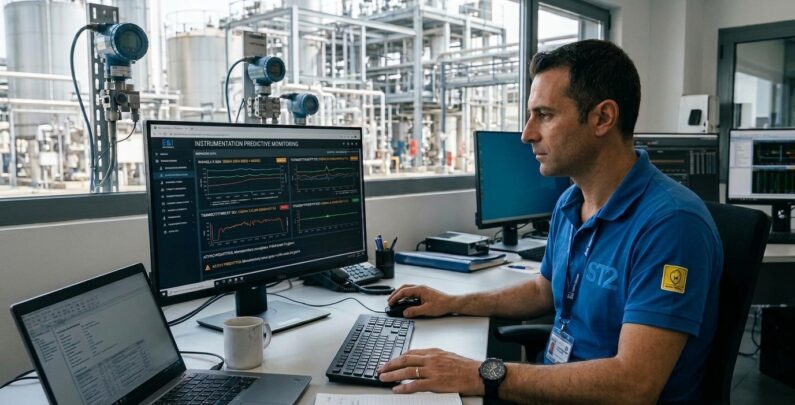
Predictive Maintenance and Process Instrumentation: A Guide to Industrial Efficiency
The transition toward Industry 4.0 has radically transformed the role of field instrumentation. Today, devices are no longer limited to simple instantaneous measurements of process parameters; they serve as the primary vector enabling advanced predictive maintenance for industrial instrumentation strategies.
In modern process plants, preventing failures before they occur is essential to eliminating unplanned machinery downtime, ensuring energy efficiency, and optimizing overall operational costs (OpEx) throughout the entire asset lifecycle.
To discover our services, click here
Predictive maintenance for industrial instrumentation: From Reactive Protocols to Real-Time Intelligent Diagnostics
Traditionally, plant maintenance relied on scheduled interventions at fixed intervals or reactive repairs performed only after a clear failure occurred, resulting in production halts.
Today, the integration of predictive maintenance for industrial instrumentation leverages smart sensors equipped with advanced digital communication protocols (such as HART, Profibus, or FOUNDATION Fieldbus) to monitor device health in real time.
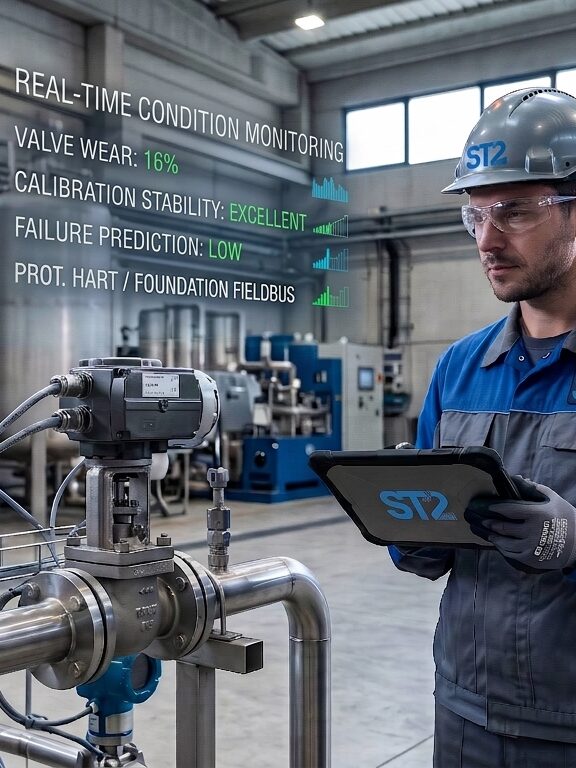
Pressure, temperature, flow, and level transmitters continuously deliver diagnostic data regarding:
- Process anomalies: Real-time reporting of air bubbles or material deposits on sensor elements.
- Mechanical stress and thermal spikes: Continuous detection of component operational degradation.
- Calibration drifts: Timely identification of deviations from nominal calibration curves.
predictive maintenance for industrial instrumentation: Condition-Based Maintenance and DCS / Asset Management Integration
Integrating this diagnostic data into Distributed Control Systems (DCS) and Asset Management platforms allows engineers to identify subtle anomalies long before they escalate into critical operational bottlenecks.
A condition-based maintenance approach enables early detection of:
- Incipient corrosion phenomena along impulse piping and process lines.
- Control valve seat wear and actuator degradation (pneumatic or electrical).
- Partial clogging in impulse taps and measurement instrument sensor blockages.
This methodology ensures that targeted maintenance interventions are planned exclusively during scheduled plant shutdowns, reducing operational personnel exposure to field hazards and significantly lowering spare parts inventory overhead.
E&I Engineering: Turning Data into Operational Decisions
Unlocking the full potential of predictive maintenance for industrial instrumentation requires specialized engineering expertise during diagnostic configuration and information flow management.
A well-designed monitoring system prevents alarm flooding for control room operators, directing technical focus strictly toward authentic anomalies. Investing in intelligent instrumentation and proper E&I engineering transforms complex data into clear, actionable operational decisions—ensuring maximum production reliability and plant safety.
Need Support for Instrumentation Diagnostics and Engineering?
Contact the ST2 Srl team today for specialized consulting on smart process instrumentation integration and predictive maintenance strategies.
📧 info@st2srl.com | 🌐 www.st2srl.com
Recent Comments